Souldrama®

Awaken Your Higher Purpose!

Welcome

About Souldrama

Workshops for the Soul

Greece Workshop

Indonesia Workshops

Donations for Indonesia

New Jersey Workshop

Israel Workshop

Portugal Workshop

NJ Training & Supervision

Poconos Pa Workshop

California- 12 Steps

Italy Workshop

Souldrama -12 Steps

Institute and Staff

For The Clinician

Corporate Trainings

Money Talks But .........

Souldrama Photos

Publications & Interviews

Souldrama Products

About Connie Miller

Testimonials

Contacts & Links

Connection
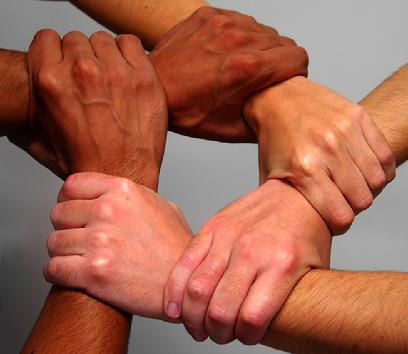
One way to access our spiritual intelligence is through team building.
Souldrama uses and teaches  the process of sociometry to help people get connected before they begin their journey and also during the actual action method of Souldrama.  Just the sociometry alone inspires people to begin their own process of transformation,  I use and teach sociometry in team building. Here is a brief overview.

Sociometry teaches teams to work well together, their individual and collective creativity is at its peak, they get along well and respect each other, they always meet their deadlines and their work is highly profitable.


Sociometry, a science developed by Dr. JL Moreno allows us to look at the underlying connections in a group, as well as the covert, often unspoken words that can inhibit productivity within a workplace. Through sociometry, these conflicts can be weeded out, unspoken connections can be identified and nurtured, work teams can be realigned and the organization can function at a higher level, allowing for more productivity and increased morale. The more satisfied people are at work, the more work they do. They more the staff gets done, the more successful the business.


Most teams are formed without any thought of how well they will work together. Someone retires and leaves a spot in a particular department. The next in line is often promoted from within and steps in to take over the job. But do we ever question if he?s the right fit for that group?

Do we ask questions such as:

Does he have a similar work style and ethic as those in his department?
Does he have a similar way of communicating?
Does this department know him and trust him?
Is he good manager material?


CRISIS INTERVENTION

Often when there has been a crisis within an organization, employees are expected to just carry on as though nothing has happened. This could manifest as a death, a downsizing, a move, termination of a top-level employee (either through quitting or firing), loss of a major account, or any a number of other scenarios.

Studies in work environments have demonstrated that if the staff?s anxiety and loss have not been attended to, productivity and morale fall sharply, and the use of sick days and personal days rises. Therefore, it is in a company?s best interests to encourage employees to have their process and get to the other side of the crisis.

Through the action methods of sociometry and sociodrama, the staff can be assisted in doing just that, so that together, they can work through this big loss or shift, and be assured that the company - and they - can survive it.

WORKSHOPS ON THE "ENERGY OF MONEY"
How do your employees see money and how does this affect the outcome of their personal lives and affect your organization?


SKILLS TRAINING THROUGH ACTION

More often then not, when an employee joins an organization, or is promoted to a new position, s/he is given a job description and a list of expectations, but little or no coaching or guidance for how to do his/her job.  This scenario can result in an employee excelling as s/he steps into this new and challenging role and/or it can result in the revealing of his/her growing edges, that is, those areas where the employee requires professional development. 


But how does an employee or supervisor learn this new role and address those growing edges, without jeopardizing the health of the company?

In skills training seminars, employees will be specifically guided through a process of practicing specific work-related skills to allow him/her to master what it takes to do his/her job.  Whether it?s a manager learning how to coach an employee, or a customer service representative learning how to speak with an irate customer, skills training through action will allow the employee the opportunity to try out a number of different responses in a safe learning environment.  Because s/he has worked out the ?kinks? in a ?professional laboratory?, when the situation arises on the job, the employee will be well prepared to handle the challenge, feel empowered and confident, and do a better job.


STRATEGIC PLANNING

When a company is planning its future, it is often done by sitting around a conference room table and tossing out ideas.  That setting certainly doesn?t inspire creative thinking - but action does.  If a company is preparing a 5 year plan, why not have staff members experience a future projection, where they can step into the organization 5 years hence and speak from that place?  With well thought out interviewing, this process will allow for increased spontaneity and creativity, which will elicit ideas that are ?outside the box?.  It also will increase excitement for the future of the organization, thus increasing morale and a sense of teamwork.


CONFLICT RESOLUTION

In work environments, there is often unresolved conflict that not only is not processed, but is rarely even spoken about. Moreover, most managers are not trained in how to resolve these types of conflicts, or worse, may be in the midst of one of them with a staff member. The proverbial ?elephant in the middle of the room? impedes employees? ability to concentrate on their work, and thus affect productivity.

Anxiety and spontaneity are inversely related. The more anxious a person is, the less spontaneous he or she can be. Therefore, when there is conflict within an organization, or poor communication, or a crisis of some kind, everyone?s spontaneity and creativity suffers. As a result, morale suffers, people are afraid to take creative risks at work, the staff feels disconnected from each other, and they don?t feel bonded towards a common goal.

It doesn?t matter at what level the anxiety exists - on the Board of Directors, amongst managers, between managers and employees or between employee and employee. That anxiety or conflict affects the ?mood? in the organization, and that negativity is contagious.

Through the process of a classical encounter, employees can be helped to state their concerns in a mutually-respectful way, and work through them productively. Each staff member will benefit from such a process, because they have all been feeling the negative effects of the tension.

This process can also be an opportunity to educate the staff on effective communication, such as being assertive vs. aggressive, thus allowing for a greater environment of mutual respect.


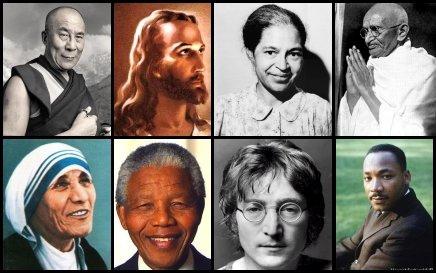
Humanitarians

Workshops for Corporate Growth/In-Service Trainings

In addtion to our Souldrama trainings, we also offer In-service training programs on action methods, addiction treatment, and spiritual development for organizations, hospitals, group practices, and treatment centers. 

Energy follows action; our need to talk, interact, and simply be with each other is part of our development.  Group psychotherapy is the most viable method for initiating, improving, and evaluating connections.  Adding action techniques is a dramatic way to alter the process of a group; it focuses the consciousness of the members on their interactions, which in turn channels and enhances the energy within a group. Adding action methods to your repertoire of clinical skills can be a natural step and a great addition to your toolbox. 
    When action methods are introduced into a group, participants become more present, connected, aware, and as a consequence, more conscious of how their lives have taken shape. When action is added to the group process it dissolves passivity and fosters clarity and intention.  Acting on thoughts and feelings gives greater visibility to our inner worlds and greater energy to our words. This clarity comes as a result of internal and external feedback and can be used to adjust our way being and listening.

Our workshops are designed to:

  • Reduce conflict and promote understanding between staff members.
  • Increase productivity and creativity through increased personal interaction and understanding.
  • Encourage a sense of teamwork.
  • Provide personal growth opportunities.
  • Change old patterns of interaction.
  • Provide a sense of unity, connection, and belonging.
UNDERSTANDING YOUR CLIENT'S RELATIONSHIP WITH MONEY

What is your client’s relationship with money?  Explore the emotional meaning of money and discover the underlying fears preventing your clients from resolving money issues. You should attend if your have clients:

  • Worry that there won’t be enough.
  • Need to resolve money issues.
  • Worry that money isn’t spiritual enough.
  • Have money disorders, compulsive spending, and debt.
  • Let money stop them from having a rewarding career.
  • Are not confident in their financial future.
THE DOUBLE:  WHAT’S NOT BEING SAID-GIVING VOICE TO THE CLIENT’S INNER WORLD.

 The double gives a voice to the inner life of the client, bringing the material that is lodged in the background forward the foreground. The double is often known as the “Invisible I."  The double will encourage the client to reach deeper layers of self-expression.  A good double will be very effective in helping the client to feel seen and understood, acting as a therapeutic ally while confronting painful emotional material and in moving the client’s action to a deeper level. 
   
HOW TO BUILD A COHESIVE GROUP 
SOCIOMETRY AND GROUP CONNECTIONS
 

Discover the patterns of connections within the group and make the overt covert. Sociometry gives insight into where the conflict is in the group and guides you to what the group needs to feel more connected.

Well-produced sociometric interventions results in three things:
-They confirm the inner structure of this group.
-Group members feel more united within themselves, and warm up to progressive roles/behaviors.
-The group re-defines itself; group member's relationships are strengthened thus enabling them to be more productive.

Use sociometry when
:

-Relationship dynamics are hindering people producing business results.
-You want to move your organizations from isolated silos to collaborative networks.
-You want to strengthen teams working in demanding situations.
-You need ways to surface and sort out issues of group conflict, trust, and identity.
-You want to understand and address the "soft" and unspoken aspects of everyday group life.
-You need to develop appropriate behaviors for your ideal work culture.
-Its time to integrate thinking, feeling, and action in business relationships. 
-You want to realize the informal leadership abilities within your organization.

CODEPENDENCY IN THE WORKSPLACE: ADDICTED TO POTENTIAL.


How does co-dependency arise in the workplace and how does it affect your employees? Do your employees stop short of achieving their full production? Co-dependency is defined as an absence of relationship with one's self.  It is a painful, conditional dependency on compulsive behavior and approval from others in an attempt to find safety, self-worth. and identity. This outside focus limits one's own creativity and spontaneity resulting in substandard production for your company. Many employees never work to their full capacity as they are addicted to their own potential. 

SECRETS OF GOOD COMMUNICATION

Great managers do not happen by accident.  Empower your relationships and increase employee and managerial understanding by learning the secrets of  great communication and commit to continued self-discovery, growth, and healthy change.  Get your point across and get results without hinting or manipulating, blame, and resentment. 

BODY LANGUAGE IN THE COURTROOM
These exercises are designed to help students tune in to the subtleties of body language and what they might mean about interpersonal behavior.


Connie Miller NCC, TEP, LPC.

SOCIOMETRY: J. L. Moreno, who investigated the structure of groups and society, developed Sociometry: the scientific measurement of social relationships in groups. As in systems models, the individual is viewed in relation to others. Sociometry in its most basic sense, can be seen as a collection of methods to investigate and evaluate networks of existing and preferred relationships. Specifically, sociometry is the study of interpersonal choices regarding criteria of interest to the investigator. Sociometry is not a study of formal group structure (e.g., official hierarchies), rather it is a phenomenological study of people's interpersonal choices.  Sociometric explorations measure, observe, and intervene in the natural attraction/rejection processes within a given group (i.e. family, social, work, or community). These explorations may be didactic or action-oriented and include social atoms, role diagrams, interpersonal relations, sociograms, and social networks.

The goals of Sociometry include:

-Facilitating constructive change in individuals and groups. 

-Increasing awareness, empathy, reciprocity, and social 
    interactions.
-
Exploring social choice patterns and reducing conflicts.

-Clarifying roles, interpersonal relationships, and values.

-Revealing overt and covert group dynamics.

-Increasing group cohesion and productivity.


Souldrama: A new method combining psychology, spirituality, and the creative arts. An action method to access your Spiritual Intelligence!

Co-creation Starts With Imagination!

The International Institute of Souldrama   
620 Shore Rd, Spring Lake Heights,

New Jersey 07762 USA
1-800-821-9919
Souldrama® is an internationally registered trademark US 903 317
and any unapproved use will result in legal prosecution.

www.souldrama.com